The System Has Blindspots - Your Health Strategy Shouldn’t

Last updated
Key Article Takeaways
- Population guidelines are a starting point, not a personal health strategy.
- Prevention should look beyond 10-year risk because many chronic diseases develop silently over decades.
- Absence of perfect evidence is not the same as evidence of no benefit.
Most people assume that if something is medically recommended, it must be the best option for them. Often, it’s better understood as the best option a system can recommend for many people at once.
That distinction matters. Modern medicine prevents suffering, treats disease, saves lives every day and has earned trust because it’s built on science, evidence and clinical experience. But medical systems also have to make recommendations under real-world constraints. They must balance benefit, harm, cost, capacity, feasibility and fairness across whole populations.
That’s necessary. It’s also not the same as asking: what makes sense for this person, with this risk profile, over this lifetime?
This gap creates blindspots. Population guidelines may be sensible without being individually optimal. Ten-year risk scores may help standardise decisions while missing diseases that develop silently over decades. And evidence-based medicine, while indispensable, can sometimes treat imperfect evidence as if it were no evidence at all, especially when the most important prevention questions are too large, slow or complex to answer neatly.
This isn’t an argument against modern medicine, doctors or guidelines. It’s an argument for using them more intelligently. Guidelines are a starting point, not a personal health strategy.
Blindspot one - population advice is not personal strategy
The first blindspot is that medical guidance is often designed for the average person, under average circumstances, inside a system with finite resources. That doesn’t make it wrong. It makes it population medicine.
Screening is the clearest example. A national screening programme can’t simply ask, “What is the most effective way to find disease early or prevent it entirely?” It has to ask what can be delivered safely, fairly and repeatedly across millions of people. That means balancing benefit against capacity, staffing, follow-up testing, false positives, cost and feasibility.
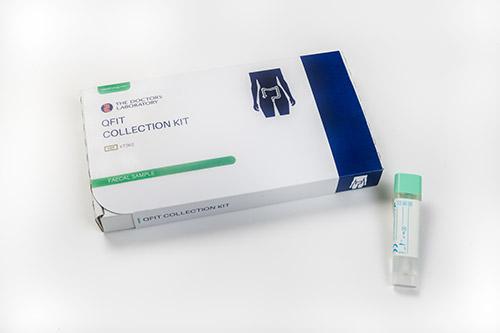
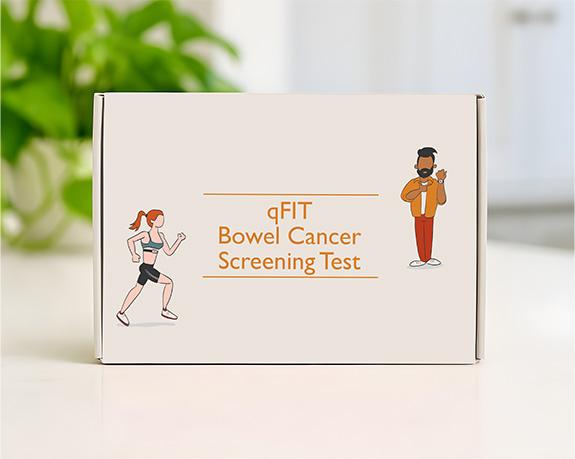
The UK bowel cancer screening programme is a useful example. In England, bowel cancer screening is offered every two years to people aged 50 to 74 using a stool test called FIT1. But the threshold for a positive result has historically been relatively high compared with more sensitive strategies. But the threshold, screening frequency and age ranges weren't chosen because they represent the most protective possible strategy for preventing bowel cancer deaths. They reflect a practical constraint: lowering the threshold, widening the age range or testing more often would identify more people who need colonoscopy, and the system has limited colonoscopy capacity2.
That distinction matters. A programme can be sensible, evidence-based and valuable while still being constrained. If there are only so many colonoscopy slots, the threshold has to be set somewhere. But once you understand that, the recommendation looks different. It’s not a statement of what’s ideal for you. It’s a population-level compromise.
Once you understand what a guideline is optimising for, you have a choice. You can accept the standard pathway as sufficient. Or, if your risk, values, family history, symptoms or appetite for prevention justify it, you can ask whether there’s a better available option - not a reckless one, but a more personalised one.
Population advice is useful. It’s just not the same as a personal prevention strategy. But population averages are only one blindspot. The second is time: even when medicine identifies the right risks, it often views them through too short a window.
Blindspot two - medicine is often short-sighted
The second blindspot is time. Modern medicine is good at identifying risk, but it often does so through windows that are too short for the diseases we’re trying to prevent.
Heart disease is the clearest example. Heart attacks and strokes rarely appear out of nowhere. They’re the end result of processes that have been developing silently for years: exposure to cholesterol-containing particles, high blood pressure, smoking, insulin resistance, excess visceral fat, poor sleep and inactivity3.
Yet many prevention decisions are still organised around a 10-year risk score. That can be useful for standardising care, especially when deciding who clearly needs treatment now. But it has an obvious limitation: age dominates the calculation. A 45-year-old with high cholesterol, rising blood pressure and a strong family history may still look “low risk” over the next decade, even while the conditions for future disease are accumulating3.
We understand this instinctively with smoking. We don’t wait until someone has a high risk of lung cancer in the next 10 years before advising them to stop. We understand that exposure matters, dose matters and time matters. The body keeps a long ledger.
The same logic applies to many slow-burn risks. Arteries, metabolism, kidneys, joints and the brain are shaped by cumulative exposure. A risk factor doesn’t have to create an immediate crisis to be worth addressing. Often, prevention matters most precisely when short-term risk still looks unremarkable.
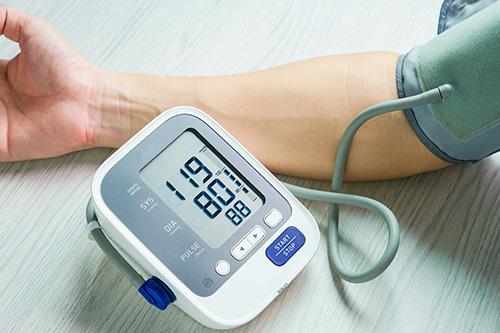
This isn’t an argument for medicalising everyone in midlife. Earlier prevention may mean better measurement, reviewing family history, tracking blood pressure at home, checking cholesterol, improving sleep, building muscle, losing visceral fat, stopping smoking or addressing metabolic health. In some cases, it may mean medication. In many cases, it won’t.
The point is to ask a better question. Not only, “Am I likely to have an event soon?” but, “What am I being exposed to repeatedly, and what might that mean over the next 30 or 40 years?”
Blindspot three - evidence-based medicine can become evidence-constrained medicine
Once prevention moves from years to decades, another blindspot appears: some of the most important questions are also the hardest to prove directly.
Evidence-based medicine is one of the great strengths of modern healthcare. It protects patients from wishful thinking, bad incentives and treatments that sound plausible but fail when properly tested. But there’s a difference between being guided by evidence and being constrained by only one kind of evidence.
Some prevention questions are too large, too slow or too complex for a perfect randomised trial to answer neatly. In those cases, responsible medicine has to become evidence-informed: synthesising trials, observational data, biological plausibility, clinical judgement, patient values and the realities of modern care.
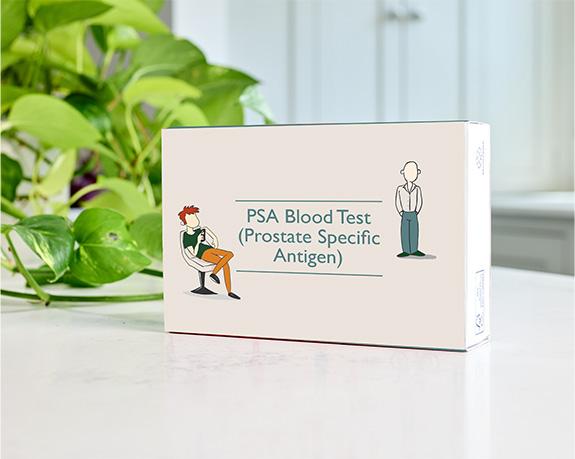
PSA screening is a useful example. PSA isn’t a diagnostic test for prostate cancer. A raised PSA doesn’t mean you have cancer. It means your risk is higher and further assessment may be worth considering4. The real question is whether PSA, used as the first step in a thoughtful pathway, can help detect dangerous cancers earlier while keeping harms under control.
The cleanest question would be: does PSA screening reduce a man’s overall risk of death? But for a single cancer screening test, that question is difficult to answer. The effect on all-cause mortality is likely to be small, follow-up needs to be long and the trial would need to be enormous5. If we demand only that answer, we may dismiss useful evidence sitting just below it.
And there is useful evidence. Trials have shown reductions in prostate-cancer-specific mortality and advanced prostate cancer6. After the 2012 USA screening guidelines recommendation against routine PSA-based screening for all men, later datasets reported rising rates of advanced prostate cancer. That doesn’t prove simple causation. But it should make us cautious about concluding that screening has no value7, 8.
The harms are real: anxiety, repeat testing, MRI scans, biopsy, overdiagnosis and sometimes treatment for cancers that may never have caused harm. But the pathway has changed. MRI before biopsy, better risk stratification, transperineal biopsy and active surveillance for low-risk disease may reduce some harms that made older screening strategies problematic.
The lesson is not that everyone should be screened for everything. More testing is not always better. But absence of perfect evidence is not the same as evidence of no benefit.
Evidence-informed medicine isn’t a retreat from science. It’s science applied with judgement. That is the mindset this article is arguing for: not rejecting guidelines, not becoming your own doctor, but becoming a more thoughtful partner in decisions that may shape the next several decades of your health.
From passive patient to informed partner
These three blindspots point to the same lesson: the medical system can be right at the population level and still incomplete at the personal level.
That’s not a reason to distrust it. It’s a reason to engage with it more actively. Guidelines matter. Doctors matter. Evidence matters. But none of them removes the need to ask better questions about your own risk, your own time horizon and your own preferences.
The practical shift is from passive acceptance to informed partnership. Instead of asking only, “What am I eligible for?” ask, “What is this recommendation optimising for?” Instead of asking only, “Is my 10-year risk low?” ask, “What exposures am I accumulating over decades?” Instead of asking, “Is the evidence perfect?” ask, “What does the totality of evidence suggest, and what are the tradeoffs?”
This doesn’t mean more testing is always better or that every risk factor needs medication. It means prevention should be personal, proportionate and deliberate.
The goal is not to reject modern medicine. It’s to use it more intelligently - with a longer time horizon, a clearer understanding of tradeoffs and a health strategy that is actually built around you.
Get tips on better health
Sign up to our emails on the better way to better health.
We'll keep you up-to-date with the latest research, expert articles and new ways to get more years of better health.