Personalise your FIT test
Subscribe & save
PopularBest practice is to screen for bowel cancer every year from your 40s. Subscribe to a yearly qFIT test and save 15%.
Add to your test
3 add-ons availableTotal price:
£59.00
Includes our
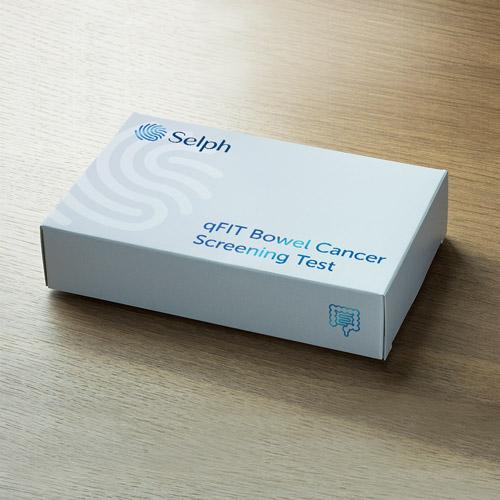
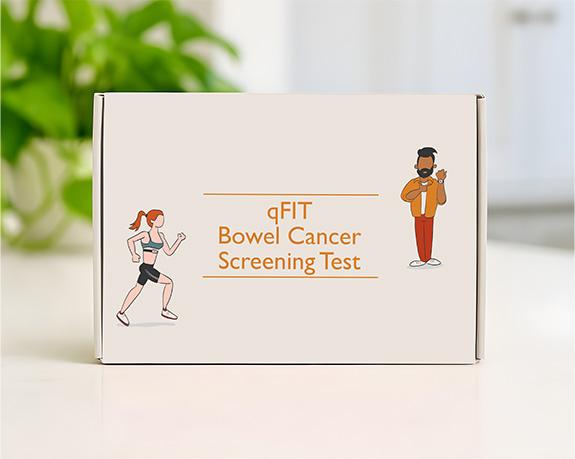
Home FIT Test for Bowel Cancer Screening
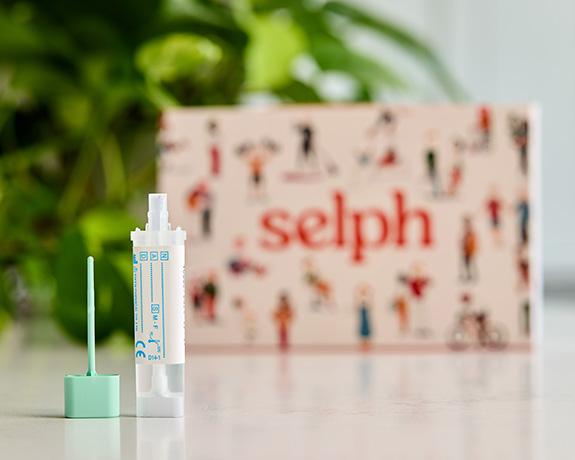
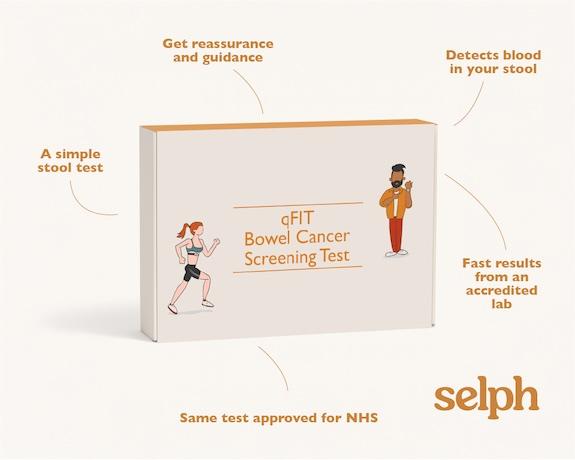
A home FIT stool test - quantitative faecal immunochemical test or qFIT test - checks for hidden blood in the stool.
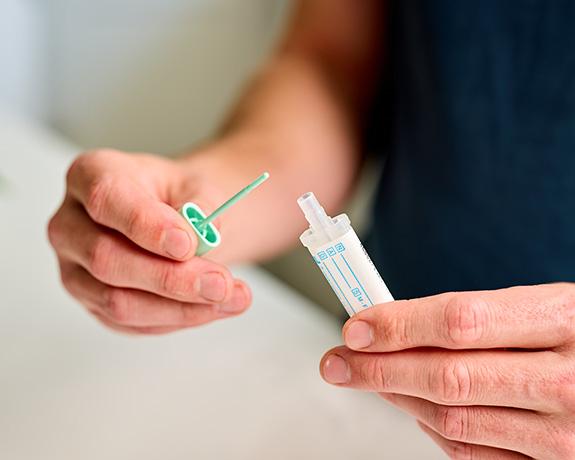
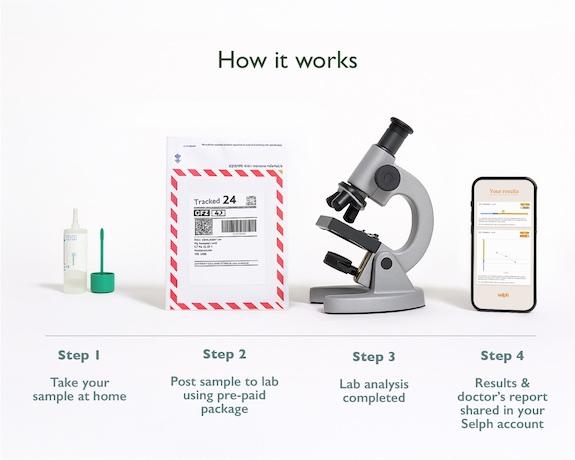
The FIT test is used in NHS bowel cancer screening and to assess people with bowel symptoms. Collect your sample at home, send it to our UKAS-accredited lab for analysis and get your numerical FIT result and doctor's report in under a day.
 Same-day results (for over 90% of tests)
 Free, next-working day delivery
 Same as FIT test used by the NHS
 20% of profits donated to St Mark's Hospital
Written by Dr Alasdair Scott PhD, GMC-registered doctor and bowel cancer surgeon.
About the FIT test for bowel cancer screening
The FIT test - also called a qFIT test - checks for blood in the stool which can be an early sign of bowel cancer.
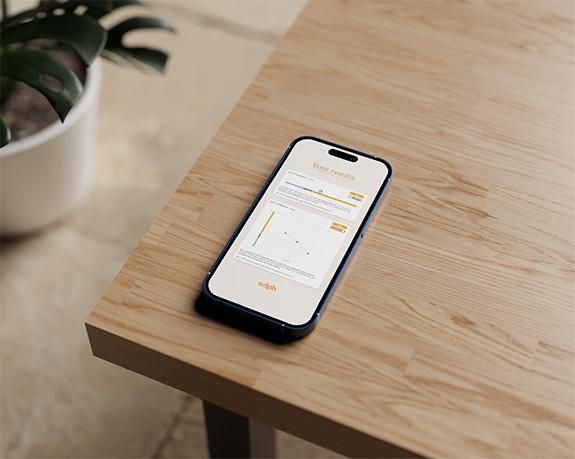
This private FIT test is the same type of FIT stool test used by the NHS but you'll also get your actual FIT level and a doctor's report explaining what your level means and any next-steps. You can download your formal lab report so you can easily share it with your doctor.
What’s the difference between FIT and qFIT?
Selph provides the qFIT test which is the gold-standard FIT test used in NHS bowel cancer screening programme.
FIT stands for faecal immunochemical test. qFIT (quantitative FIT) is a specific type of FIT test that measures the amount of blood detected in the stool sample and provides a numeric value rather than simply "positive" or "negative".
When should I start screening for bowel cancer?
Bowel cancer is common and will affect around 1-in-15 of us. Rates of bowel cancer are going up people under 50 so we recommend starting to screen for bowel cancer with a FIT stool test every year from your 40s. This is the best practice followed in other countries like the USA.
What are the main symptoms of bowel cancer?
The main symptoms of bowel cancer include:
- A change in bowel habits
- Blood in the stool
- Stomach pain or lumps
- Weight loss
- Unexplained fatigue or tiredness
In the early stages, many people with bowel cancer have no symptoms but a qFIT test can pick up hidden blood in the stool, identifying people who might need further investigation for bowel cancer. The sooner you detect bowel cancer, the better your chances of beating it.
What do the FIT test results mean?
Your bowel cancer FIT test result will include your actual FIT level and a report from one of our doctors explaining what your level means. You'll also be able to download your formal lab report so you can easily share it with your doctor.
A negative FIT test result means that no blood was detected in your stool and it's much less likely that you have bowel cancer.
A positive FIT test result means that blood was detected in your stool and you'll get a number with the amount of blood in the stool, measured in micrograms per gram of stool (µg/g). This is usually between 4 and 200µg/g. The higher the number, the more likely it is that bowel cancer is the cause.
| FIT level (µg/g) | Risk of having bowel cancer (approx.) |
|---|---|
| Less than 4 (“negative”) | 1 in 1000 |
| 4 - 9.9 | 1 in 160 |
| 10 - 99.9 | 1 in 30 |
| 100 or higher | 1 in 5 |
Limitations of the bowel cancer qFIT test
Although FIT tests are one of the best tests we have to pick up bowel cancer early, they're not perfect:
- Around 1 in 1000 people can have a negative qFIT test but later be found to have bowel cancer.
- Most people with a positive qFIT test do not have bowel cancer. Remember, a qFIT test doesn't diagnose bowel cancer, it just looks for the presence of blood in the stool.
- If a qFIT test picks up blood in your stool, you may need a camera test to look inside the bowel to know what's caused it.
How the FIT test works
In the box
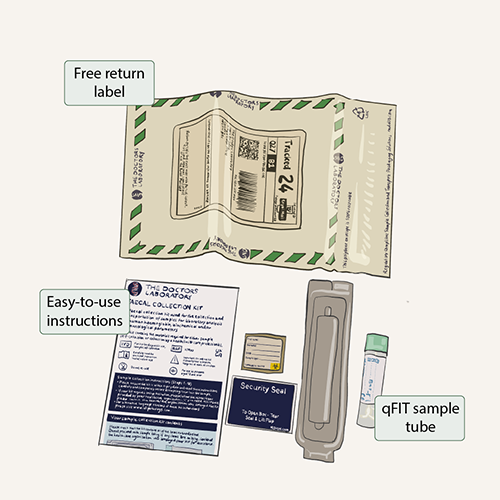
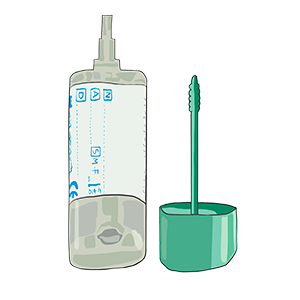
Take your test
You'll get your FIT collection kit quickly.
Collect your FIT stool sample at home and send it back to our UKAS-accredited lab for analysis.
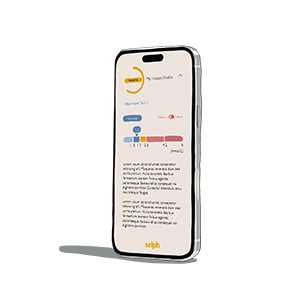
Get rapid results
Same-day results (over 90% of tests).
Your result includes the FIT level and a doctor's report to help you understand what it means.

Get support
We get that doing a FIT test can be a bit daunting - our doctors and admin team are always just a phone-call away if you need any help.
Find out more about the FIT test for bowel cancer
A FIT (faecal immunochemical test) is a stool test used to check for tiny amounts of hidden blood in the stool. Blood in the stool can sometimes be caused by bowel polyps or bowel cancer.
FIT tests are widely used in NHS bowel cancer screening programmes and are also commonly used to assess people with bowel symptoms.
A FIT (faecal immunochemical test) is a stool test used to check for tiny amounts of hidden blood in the stool. Blood in the stool can sometimes be caused by bowel polyps or bowel cancer.
FIT tests are widely used in NHS bowel cancer screening programmes and are also commonly used to assess people with bowel symptoms.
It's best not to take this test while you're on your period. You don't need to make any changes to your diet or any medications and supplements that you may take.
It's best not to take this test while you're on your period. You don't need to make any changes to your diet or any medications and supplements that you may take.
NHS Bowel Cancer Screening is only available to individuals aged 50 to 74 years, can only be taken once every two years and only considers a FIT level of 120µg/g to be positive. You also don't usually receive your actual FIT level with the NHS FIT test.
In contrast, a private FIT test is available to anyone aged 18 and over, can be taken as often as you like, considers any detectable FIT level (i.e. 4µg/g or higher) to be positive and provides you with your actual FIT level.
A private FIT test doesn't replace NHS Bowel Cancer Screening but if you want to perform gold-standard bowel cancer screening - starting in your 40s, testing every year and with a low FIT threshold for positivity - then a private FIT test is the way to go.
NHS Bowel Cancer Screening is only available to individuals aged 50 to 74 years, can only be taken once every two years and only considers a FIT level of 120µg/g to be positive. You also don't usually receive your actual FIT level with the NHS FIT test.
In contrast, a private FIT test is available to anyone aged 18 and over, can be taken as often as you like, considers any detectable FIT level (i.e. 4µg/g or higher) to be positive and provides you with your actual FIT level.
A private FIT test doesn't replace NHS Bowel Cancer Screening but if you want to perform gold-standard bowel cancer screening - starting in your 40s, testing every year and with a low FIT threshold for positivity - then a private FIT test is the way to go.
This simple stool test checks for tiny amounts of blood in the stool which you wouldn't be able to see. Blood in the stool can be a sign of a bowel polyp or cancer. If you have a positive result then we would usually recommend that you have a further test, such as a bowel camera test or colonoscopy, to have a look inside the bowel. If you have a negative test then it's very unlikely that you have bowel cancer.
This simple stool test checks for tiny amounts of blood in the stool which you wouldn't be able to see. Blood in the stool can be a sign of a bowel polyp or cancer. If you have a positive result then we would usually recommend that you have a further test, such as a bowel camera test or colonoscopy, to have a look inside the bowel. If you have a negative test then it's very unlikely that you have bowel cancer.
When you take a FIT stool test with us, we'll give you the actual numeric value returned by the lab. We consider any amount of blood detected by a FIT to be a positive test. This is because studies show that, if you have bowel symptoms, even a very low FIT level of 4-9µg/g can be caused by bowel cancer.
Different qFIT thresholds are considered "positive" in the NHS. If you have gut symptoms and take a qFIT test with your GP, they would generally only consider a result of 10µg/g to be positive. If you take a qFIT test as part of the Bowel Cancer Screening Programme, they only consider a result of 120µg/g to be positive.
When you take a FIT stool test with us, we'll give you the actual numeric value returned by the lab. We consider any amount of blood detected by a FIT to be a positive test. This is because studies show that, if you have bowel symptoms, even a very low FIT level of 4-9µg/g can be caused by bowel cancer.
Different qFIT thresholds are considered "positive" in the NHS. If you have gut symptoms and take a qFIT test with your GP, they would generally only consider a result of 10µg/g to be positive. If you take a qFIT test as part of the Bowel Cancer Screening Programme, they only consider a result of 120µg/g to be positive.
Firstly, it's important to stress that most people with a positive FIT result (even if the level is high) do not have bowel cancer. They have another cause for the blood, such as haemorrhoids (piles).
If you have a positive FIT result, we will advise you to see your GP. They will go through your symptoms and medical history. They will discuss with you whether further tests, such as a colonoscopy to look inside the bowel, are necessary.
Firstly, it's important to stress that most people with a positive FIT result (even if the level is high) do not have bowel cancer. They have another cause for the blood, such as haemorrhoids (piles).
If you have a positive FIT result, we will advise you to see your GP. They will go through your symptoms and medical history. They will discuss with you whether further tests, such as a colonoscopy to look inside the bowel, are necessary.
Our FIT tests are analysed by The Doctors Laboratory (TDL). TDL are one of the largest laboratories in the UK and test for both the NHS (e.g. University College Hospital London) and private providers such as ourselves. Either way, the exact same testing platforms and procedures are used.
However, no test is perfect and there can always be "false positive" and "false negative" results.
Using a low positive threshold of 4µg/g (the limit of detection for the test), FIT testing detects over 93.4% of bowel cancers while maintaining a specificity of approximately 77%., the sensitivity of the FIT test to pick up bowel cancer is over 93.4% with a specificity of 77%. The "negative predictive value" (the likelihood that you don't have bowel cancer if you get a negative FIT result) is approximately 99.9%ref.
Our FIT tests are analysed by The Doctors Laboratory (TDL). TDL are one of the largest laboratories in the UK and test for both the NHS (e.g. University College Hospital London) and private providers such as ourselves. Either way, the exact same testing platforms and procedures are used.
However, no test is perfect and there can always be "false positive" and "false negative" results.
Using a low positive threshold of 4µg/g (the limit of detection for the test), FIT testing detects over 93.4% of bowel cancers while maintaining a specificity of approximately 77%., the sensitivity of the FIT test to pick up bowel cancer is over 93.4% with a specificity of 77%. The "negative predictive value" (the likelihood that you don't have bowel cancer if you get a negative FIT result) is approximately 99.9%ref.
We don't recommend taking a FIT test if you:
- are a child (17 years or under). Bowel cancer is essentially unheard of at this age and if you're concerned, it would be better to discuss this with your GP.
- are pregnant. If you feel you need to take a qFIT test and are pregnant, please discuss this with us.
- are feeling acutely unwell - e.g. with a cold or flu or if you have new-onset (i.e. within the last few days) gut symptoms like stomach pain or diarrhoea.
If you're unsure if you should use this test panel, please contact us for advice.
We don't recommend taking a FIT test if you:
- are a child (17 years or under). Bowel cancer is essentially unheard of at this age and if you're concerned, it would be better to discuss this with your GP.
- are pregnant. If you feel you need to take a qFIT test and are pregnant, please discuss this with us.
- are feeling acutely unwell - e.g. with a cold or flu or if you have new-onset (i.e. within the last few days) gut symptoms like stomach pain or diarrhoea.
If you're unsure if you should use this test panel, please contact us for advice.
Still have questions?
If you have any questions, we're here to help. Our customer service team is hands-down the best you'll ever deal with. They're smart, friendly, knowledgeable and will get back to you in a flash.