FIT tests for bowel cancer - what you need to know

Last updated
Key Article Takeaways
- Bowel cancer is often missed until it’s at a late stage and it’s harder to cure.
- If you’ve noticed a change in your bowel habit, stomach pain or other bowel symptoms, you should consider taking a FIT test.
- A FIT test looks for microscopic amounts of blood in the stool, which can be a sign of bowel cancer.
- If no blood is found on the FIT test then it’s very unlikely you have bowel cancer.
- If blood is found in the stool, then you might need further tests.
Bowel cancer is the UK’s fourth most common cancer, but in most cases it’s not diagnosed early enough1. A quantitative faecal immunochemical test (qFIT) or FIT test can be used to test for bowel cancer and hopefully pick it up early. We’ll cover what a FIT test is, when to take a FIT test and FIT test result ranges and what they mean.
What is a FIT test?
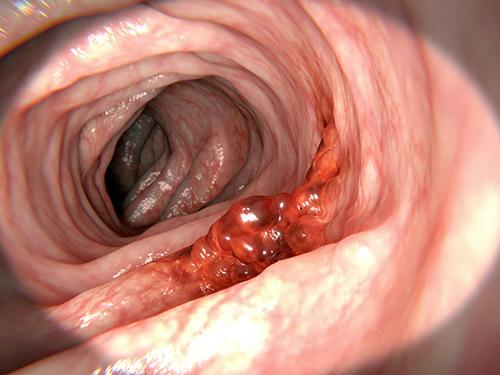
Bowel cancers (and some polyps - bowel cancer precursors) often bleed into the bowel. However, the amount of blood is often very small and not visible in the stool. A FIT test (faecal immunochemical test) is an at-home stool test that can check for this hidden blood in the stool.
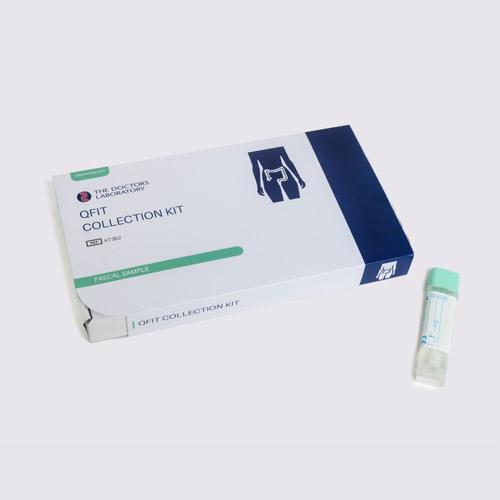
Taking a FIT test is very easy and you can do it at home. You'll receive a kit containing a collection tube and sampling "stick". You simply scrape the FIT sampling stick across the stool to collect a tiny amount, put it in the tube and send it off to the lab for analysis.
When should I take a FIT test?
There are two main times when you would take a FIT test: when you have bowel symptoms and when you have no symptoms and are screening for bowel cancer.
You have bowel symptoms
The main bowel cancer symptoms to watch out for are a change in bowel habit, stomach pain, weight loss, visible blood in the stool and feeling like you need to open your bowels again, even though you've only just been.
If you have some of these symptoms and they don't settle down on their own, then it's often recommend to check for bowel cancer with a FIT test, particularly if you're over 40 years old2.
You don't have symptoms and are screening for bowel cancer
Bowel cancer often doesn't cause any symptoms until it's quite advanced and harder to treat. In the early stages, microscopic blood in the stool is often the only sign of bowel cancer and we can pick this up with a FIT test.
Because bowel cancer gets more common with age, it's generally recommended to start screening for bowel cancer from your 40s onwards. We do have a screening programme for bowel cancer in the UK, but unfortunately it doesn't start until 50 and has some other limitations that are important to be aware of.
What is the FIT test results range?
Broadly, you’ll get one of two types of result from your FIT test. You’ll either get “no blood was found” or “some blood was found and here’s the concentration".
FIT test analysers have a "lower limit of detection" - this is the lowest concentration of blood that can actually be detected. In most labs, the lowest FIT test result is 4 ug/g. If there's no blood in your stool or less than 4 ug/g, your FIT result will usually be written as "<4 ug/g" (less than 4 ug/g). Studies have shown that if you’re in this “undetectable” range your risk of having bowel cancer is incredibly low; under 1 in 1000 even if you have bowel symptoms3.
If some blood is found, your FIT test result will be a number measured in ug/g (micrograms of blood per gram of stool), indicating the concentration of blood detected in your stool. All FIT analysers also have an "upper limit of detection" - the highest amount of blood they can detect. Most of the time, this is a FIT test result of 200ug/g. If you have more blood than this in your stool, you'll simply get a result of ">200 ug/g" (greater than 200 ug/g).
What does my FIT test result mean?
It's really important to understand that a having a positive FIT test with blood in the stool does not mean you have bowel cancer. In fact, there are many more common causes of blood in the stool than bowel cancer such as haemorrhoids, fissures, infection and inflammation.
A positive qFIT test just means you're at higher risk of having bowel cancer. The risk of bowel cancer depends on the FIT test result.
Table 1 below shows the the approximate risk of having bowel cancer at various FIT levels in adults with bowel symptoms.
| FIT level (µg/g) | Interpretation | Risk of having bowel cancer (approx.) |
| <4 (Less than 4) | Negative | 1 in 1000 or less |
| 4 - 9.9 | Borderline | 1 in 160 |
| 10 - 99.9 | Positive | 1 in 30 |
| 100 or higher | Positive | 1 in 5 |
If your FIT result is “negative” - i.e. no blood found - you can be reassured that it’s very unlikely that you have bowel cancer. Even if you have bowel symptoms, it’s most likely that something else is causing them. That’s why we always recommend keeping an open mind and listening to your body. If something’s not settling down then you should always see a healthcare professional regardless of any test results.
If your FIT test result comes back as detecting blood in your stool, it’s important to keep the numbers above in mind and know that it’s still likely that you don’t have bowel cancer. But, depending on your age, FIT level and any bowel symptoms, you may need to do further tests like a colonoscopy to look inside the bowel to find the cause of bleeding. The next step is to see a healthcare professional like your GP who can discuss this with you and make a plan.
If you get your FIT test with Selph, we’ll explain what your result means and give you recommendations on any actions to take. If you need to take things further, you can take your FIT result with you and know that you’re a step ahead.
I can see blood in my stool - is it still worth taking a FIT test?
You might think that if you can see blood in your stool there’s no point taking a FIT test as it’ll definitely be positive. However, that’s not what research studies have shown. In a recent large study done in the UK, 66% of people who complained of rectal bleeding actually had no blood detected in their FIT test. If no blood was detected, their risk of having bowel cancer was 1 in 10004.
Many of the causes of rectal bleeding that you see, like haemorrhoids (piles) or small tears around the bottom (fissures), mainly cause bleeding after opening your bowels and on the toilet paper. In these cases, the FIT test is often negative.
If you see blood in your stool, we always recommend discussing it with a healthcare professional. While you wait, you may also want to take a FIT test. If no blood is detected then you can be reassured that it's unlikely your bleeding is caused by bowel cancer.
Beware of bowel cancer home tests
Unfortunately, there is some confusing terminology when it comes to bowel cancer tests.
With a proper FIT test, you take the sample at home, but post it to a lab for analysis. This is the only type of FIT testing that has been validated in large studies for people with bowel symptoms and people who are screening for bowel cancer.
However, there are also lateral flow tests that use the same technology as rapid COVID tests to detect blood in the stool. These are often called "bowel cancer homes tests" but they are very different to a lab-based FIT test even though in both cases the sample is taken at home.
Lateral flow bowel cancer tests vary wildly in their quality and limits of detection, have not been validated in large trials and are not used in modern healthcare. For this reason, we would strongly recommend avoiding them. Bowel cancer is too serious to trust to these devices.
Get tips on better health
Sign up to our emails on the better way to better health.
We'll keep you up-to-date with the latest research, expert articles and new ways to get more years of better health.