What is GGT and what can it tell you about your health?

Last updated
Key Article Takeaways
- Gamma-glutamyl transferase (GGT) is an enzyme found in your liver.
- Raised GGT levels can be due to alcohol, metabolic disease and liver inflammation.
- You should not use GGT to see if you are drinking a “safe” amount of alcohol.
- High levels of GGT are associated with an increased risk of metabolic disease, heart disease and diabetes.
- The GGT normal range is 6 - 42 IU/L in women and 10 - 71 IU/L in men. However, an optimal GGT is < 20 IU/L.
- You can get your GGT level with 7 Simple Checks
Gamma-glutamyl transferase, or GGT for short, is an enzyme produced by your liver. Your serum gamma GGT level is the amount of GGT measured in your blood and is one of the standard biomarkers reported in a liver function test panel. GGT is particularly useful because its levels are affected by alcohol intake, liver disease and metabolic health. However, a raised GGT does not identify the cause on its own.
In this article, we’ll dive into a little more detail around what GGT actually is, why it’s an important marker for your health and the optimal and normal GGT ranges.
What is GGT (gamma-glutamyl transferase)?
Gamma GT is an enzyme found in the cell membranes of most cells in your body but with larger amounts in your liver cells (hepatocytes). GGT is a key part of your antioxidant system, protecting your cells against oxidants produced during normal metabolism. In particular, your liver cells produce oxidants when metabolising (breaking down) alcohol and it’s GGT that keeps them in check1.
Some GGT leaks out of liver cells into your blood and where we can measure it as “serum gamma GT”.
Why is GGT important?
Serum gamma GT is a useful marker of liver disease. Injury to liver cells causes more GGT to leak into the blood so serum gamma levels go up. However, a high GGT doesn’t tell us what caused the liver injury in the first place. Liver injury can be caused by alcohol, infections, medications, blockage to bile ducts and fat accumulation to name but a few and all of these can cause serum GGT levels to rise.
What can cause high GGT levels?
- Alcohol
- Metabolic syndrome
- Blockage of bile ducts
- Drugs
- Liver inflammation
However, sometimes GGT levels are particularly high and this can give us a clue as to the cause of liver damage. GGT is found in high levels in the bile duct cells of the liver2 so blockage of the bile ducts (e.g. by gallstones) can cause a large increase in the serum gamma GT level.
Alcohol-related liver disease is another cause of particularly high serum GGT. Metabolism of alcohol results in oxidative stress and, beyond a certain point, the liver needs to produce more GGT to cope with it. Couple increased production of GGT with leakage from alcohol-damaged cells and you can get pretty high GGT levels.
Is GGT a useful marker of “safe” alcohol intake?
Even before you get to significant liver damage, the increased production of GGT by the liver in response to alcohol can be used as a biomarker of alcohol intake. Studies show that serum gamma GT increases in proportion to alcohol intake as shown in figure 1 below3.
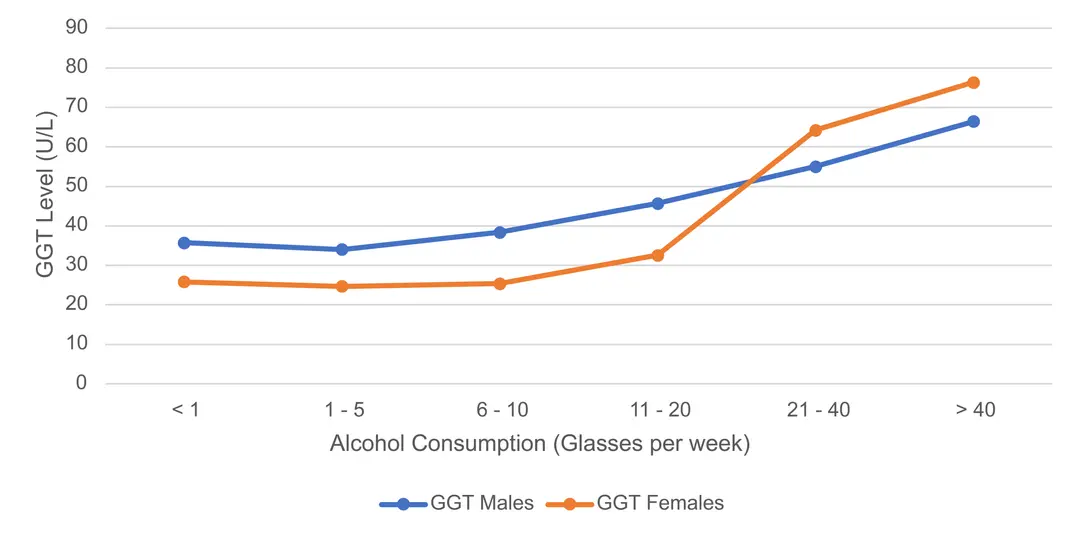
As you can see, GGT starts to go up once you get above about 6-10 glasses of alcohol a week. This is because your liver can handle some alcohol without increasing GGT levels.
However, note that 6-10 glasses is roughly the upper limit for alcohol in the UK guidelines4. So by the time your GGT starts to go up, you’re already well into moderate to heavy drinking territory and are almost certainly drinking more than you should by even the relatively relaxed UK guidelines.
You cannot use GGT levels to see if you're drinking a "safe" level of alcohol.
So can you use your GGT level as a marker of a safe amount of alcohol intake for you? If your GGT is normal is your alcohol intake fine? No - absolutely not! Firstly, as we’ve shown serum gamma GT only starts to go up when you’re already drinking too much. Secondly, GGT is just a marker of oxidative stress in your liver but alcohol affects nearly every organ in your body including your bowel, heart and breasts in women. The amount of alcohol required to push up your GGT is way over the amount shown to increase your risk of heart disease, bowel cancer and breast cancer5.
Lastly, let’s be honest with ourselves. We know if we’re drinking too much alcohol - we don’t need a test to tell us.
What can serum gamma GT tell you about your metabolic health?
You can think of your “metabolic health” as the end result of the interactions between your genes, your lifestyle (diet, exercise and so on) and your microbiome. Metabolic health is important because it's one of the main drivers of heart disease, stroke, cancer, diabetes and dementia - the top causes of death and disability that affect us all.
One of the causes of metabolic disease is fat accumulation in your organs, particularly the liver. In its extreme form, this results in so-called “metabolic dysfunction-associated fatty liver disease” (MAFLD) and “metabolic dysfunction-associated steatohepatitis” (MASH) which is the fastest growing reason for people to require a liver transplant in more economically developed countries.
But well before you get to significant long-term liver damage, a rise in serum GGT can be a sign that you have metabolic disease. A number of studies have shown that, even within the “normal range” (we’ll get to that later!) a higher GGT is associated with a higher risk of having metabolic disease and the development of diabetes6 and heart disease7.
What’s the GGT normal range for serum gamma GT level?
In short: Selph uses a GGT normal range of 6 - 42 IU/L in women and 10 - 71 IU/L in men. We consider a GGT level under 20 IU/L to be optimal.
The “normal” range for serum gamma GT will vary slightly from lab to lab. However, most labs will report a normal serum gamma GT level as:
GGT normal range
- Females: 6 - 42 IU/L (units/litre)
- Males: 10 - 71 IU/L
However, be aware that normal ranges can differ slightly between laboratories.
However, there’s a bit more to it than that. Normal ranges are based on a sample of people deemed to be “healthy” or “normal”. In the UK, almost three quarters of the population aged 45 to 74 are overweight or obese8, 1-in-4 people die of heart disease9 and 1-in-4 die from cancer10. Being in the “normal” range does not mean that you are “optimal” or even healthy. In fact, the reality is that even within “normal” the higher your GGT (or other enzymes like ALT and AST), the higher your risk of metabolic disease6, 11.
The figures below show data from 10,000 men and women aged 40-69 who were followed up over 12 years to look at how many developed metabolic disease6.
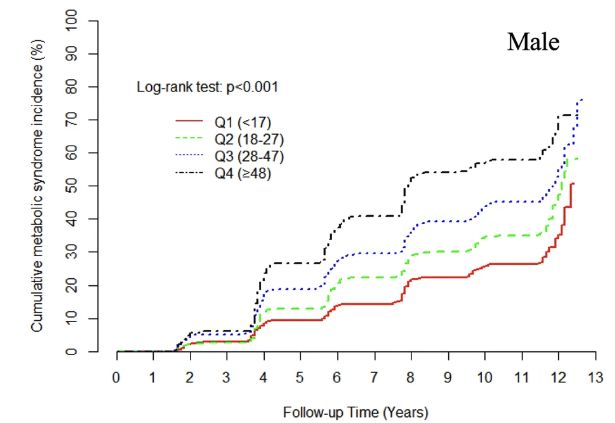
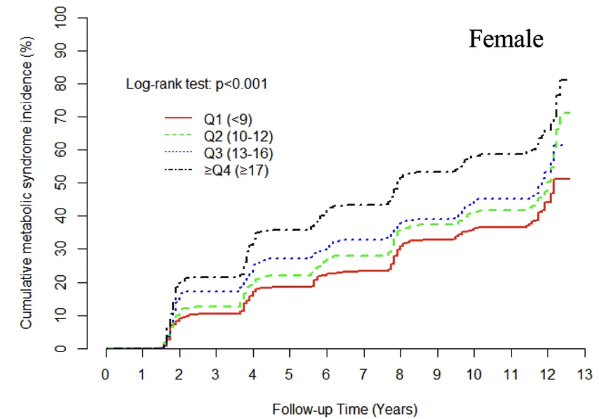
They divided males and females into four groups (quartiles) based on their GGT levels. As you can see, for both men and women, the risk of developing metabolic disease increased as the GGT level went up. Importantly, you can see that compared to people with the lowest level of GGT (<17U/L in males and <9U/L in females), having a higher, but still “normal” GGT, is associated with a higher risk of developing metabolic disease. Other studies have presented similar findings12.
So what’s the optimal serum gamma GT level? Well, lower is better and a level under 20 IU/L could be considered optimal.
How can you find out your GGT level?

Gamma GT is included in a standard liver function test panel. For example, we include GGT in our 7 Simple Checks annual health screen. You can think of this test panel as a health “MOT” checking for key markers of organ function, such as your liver, as well as assessing your metabolic health.
GGT FAQs
What GGT level is considered high?
What level of GGT is considered high depends on your sex. For females, a GGT over 42 IU/L is high. For men, a GGT over 70 UI/L is high.
Does a high GGT mean fatty liver?
A high GGT level can have lots of causes, including fatty liver. Other causes include: - alcohol - bile duct blockage - medications - liver inflammation It's important to be aware that we can't tell the cause of high GGT from this test in isolation. It needs to be considered with other liver function markers and your clinical history.
What should you do if your GGT is high?
If your GGT is high, it's best to discuss the result with a healthcare professional. They'll put the GGT level into context with your other blood tests and clinical history. They may want to repeat the GGT level or arrange further investigations to understand why the GGT is high.
Get tips on better health
Sign up to our emails on the better way to better health.
We'll keep you up-to-date with the latest research, expert articles and new ways to get more years of better health.